Saturday, 8 September 2012

Waveguides


Today we shall concentrate on one of the Transmission media called wave guides. A hollow conducting tube to transmit electromagnetic waves is termed as wave guide. A waveguide is a hollow tube designed to carry microwave energy from one place to another place. Waveguides may be used to carry energy between pieces of equipment or over longer distances. Waveguides are made from copper, aluminum or brass. These metals are extruded into long rectangular or circular pipe


The electric and magnetic fields of electromagnetic wave are confined to the space within the guide and made to propagate down the length of the wave guide.


Characters of waveguides:
  • The propagation takes place through the dielectric field.
  • Propagation is in terms of electric and magnetic fields rather than voltage and currents.
  • The electric and magnetic fields that exist inside the waveguide are solution of Maxwell’s wave equation.
  • Each waveguide has cut off frequency that decides the dominant mode of propagation.

Coming to the types of waveguides. There are three types of waveguides namely:
  1. Rectangular waveguide:


     2.circular (cylindrical) waveguide:


     3.Ridged waveguide:


Advantages of waveguides:
  • The waveguides can be used at much higher frequencies than the co-axial cables.
  • Easy to manufacture than co-axial cable because waveguides are hollow.
  • Waveguides do not have either inner conductor or dielectric material, therefore power handling ability is improved. It is about 10 times as high as for co-axial air dielectric rigid cables.
  • Power losses are less.
  • There is no radiation loss.

Applications:

  • They are at their supreme in microwave transmission.
  • Used to connect Radar transmitter to antenna.
  • Used to channel the received echo to the receiver from the antenna


Friday, 7 September 2012

INTEGRATED CIRCUIT


Hi friendz today we shall have some knowledge about integrated circuits (abbreviated as IC).Before knowing the definition of ICs we shall know why an IC was developed?
 Now a days integrated circuits are more popular. In the early days some discrete components like capacitor, resistor, diodes, were used to be connected in a definite pattern(using wires) called electronic circuit. As the technology advanced the discrete components were integrated on a single chip this is called integrated circuit.
Integrated Circuit


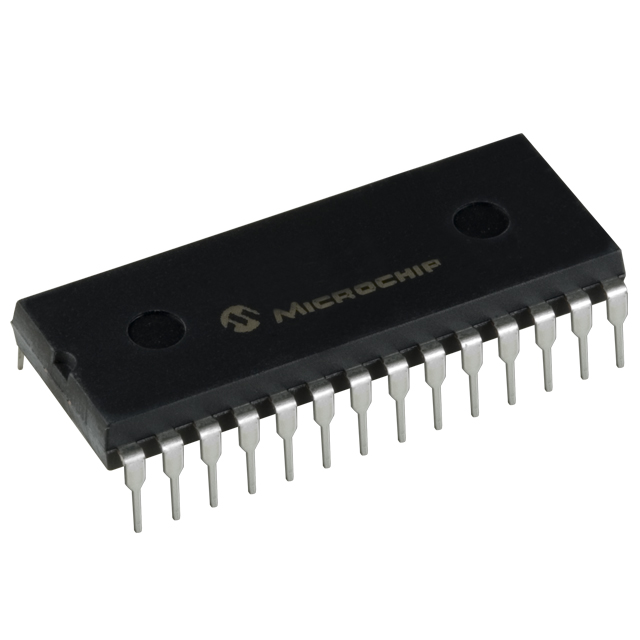
Now coming to the definition : An IC is one in which a number of circuit elements like resistors, capacitors, transistors, diodes etc are fabricated on a small semi conductor chip to perform a complete function.


Classification of Ics:
  1. Classification by Scale of integration:
·        SSI (Small scale integration) : ICs having 0 to 12 components on a single chip. Ex: Logic gates, Flip-flops.
·        MSI (Medium Scale Integration): Ics in this category contains 13 to 99 electronic components on a single chip. Ex: Adders, registers, encoders, multiplexers.
·        LSI (Large scale integration): Ics having 100 to 9999 components in a single chip comes under this category. Ex:Microcontroller, RAMs, ROMs
·        VLSI (Very Large scale Integration): Ics in this have 10000 to 99999 components in a single chip. Ex: Advanced microprocessor, Memory chips.
·        ULSI (Ultra Large Scale Integration): The components in the Ics of this type are more than 100000. Ex: Single chip Microprocessors, memory chips.
    
  1. Classification by Structure:
    • Monolithic
    • Film Passive : Thick film and Thin film ics
    • Hybrid Ics

  1. Classification of Ics by function:
  •           Analog Ics
    Analog IC
    • Digital Ics


Digital IC
Advantages of Integrated Circuits:
  • Smaller weight.
  • Low cost
  • Highly reliable
  • Low power consumption
  • Easy replacement

Disadvantages of Integrated circuits:

·        Transformers, inductors can’t e fabricated.
  • Large values of capacitance > 30pF can’t be built.
  • The components in the IC can’t be repaired instead whole IC should be replaced.
  • Not possible to modify circuit parameter

 Hope this was useful .. Keep visiting for exciting posts!!! 

Post ur opinions as comments!!!


Sunday, 29 July 2012

Power Electronics


Hi guys it’s been a long time to know about one more topic. Today we shall see what power electronics meant by? First of all we shall see the basics of Power electronics. Power electronics is one of the important branch of electronics and electrical engineering. It deals with conversion & control of electric energy.
Power electronics can be defined as the application of the solid state electronics for controlling & conversion of electric power. To understand the topic we should go through the basic power electronic system.

Power electronic system:


power electronic system


We all know that the AC current and voltage from the mains has always fixed frequency and this supply can not be used directly ( for example computer needs SMPS for its working) so in order to convert one form of energy into other form of energy the power electronics system is used. Thus a Power Electronic system performs the conversion and controlling of electric energy. For instance rectifier is a good example because a rectifier converts AC into DC.    


Applications:
The power electronics is used in:
  1. UPS and Standby power supplies
  2. Power control in resistance welding induction heating, electrolysis etc.
  3. Speed control of motors
  4. Solid state power compensators, static contactors etc.
  5. High voltage supplies for electrostatic precipitators and x-ray generators.
  6. Power supplies for communication systems, telephone exchanges, satellite systems etc.

Advantages:
1.      Fast dynamic response due to static devices.
2.      High efficiency of conversion due to low losses in electronic devices.
3.      Compact size and light weight of the controllers due to electronic devices.
4.      Increased operating life and reduced maintenance.
5.      Their operation is highly flexible.

Disadvantages:

  1. These generate harmonics.
  2. power factor of some electronic controllers is very low.
hope u enjoyed this.. keep visiting...

Thursday, 9 February 2012

Computer Network


Hi viewers today I am going to share some information about data/computer network which is widely used all over the world. Before going to the topic of Computer network it is necessary to know some basic knowledge about a communication network and its components.

The first thing which every one should know is “What is a Network?” and what is it made up of, A network can be defined as the group of nodes interconnected, through which the entity flows.
The network consists of several components which can be named as: Node & Branch.
Network
 First of all Node is the basic component of a communication network and can be defined as a point where two or more branches meet. The general communication network may have infinite number of nodes but it’s not necessary that each one of them is to be interconnected to every node.
In the case of Data communication the ‘Packet switch’ acts as node. Next coming to the next component Branch, Branch can be defined as the transmission medium through which the data or entity flows.
The branch may be of wired or wireless medium..

Computer network:-

Computer network is a group of computers which are interconnected together using links or branches.
Computer network
The computer/Data network including the Internet carries digital data from source to destination. The switches used in the network are packet switches which use “Store & Forward” mechanism. The switches present in the network receive the data in the form of packets and stores them in the memory and then transmits them to the appropriate link which is free from congestion problem and is in working condition according to the address of the packet. The packet switches can also be called as routers.
Internet is a network of networks which was used to carry text messages, but now a days the advancement in technology has made possible to support the multimedia and even web facility also.

A computer network:-
·  Is primarily a digital network
·  Supports variable bit rates/bandwidth as data is bursty in nature.
·  Was originally designed carry non-real time traffic.
·  Is generally non-interactive.
·  Is full duplex.
·  Has to have switches with buffers.
According to ARPA the switches earlier were called as IMP (Interface Message Processors). Now they are called as PSE (Packet Switching Exchanges). While with respect to internet they are termed as routers.

                         
Necessity of the computer network:-
  1. Resource sharing
  2. High reliability.
  3. Saving money and time.
  4. It provides a powerful communication medium which enhances human-to-human communication.

Advantages:-
  1. Reduces cost through sharing of data between users.
  2. It allows sharing of resources.
  3. It provides standardization of applications.
  4. It enables efficient communication and scheduling.
  5. Facilitates electronic access to remote computers.

Disadvantages:-
  1. The fault in server penetrates in the user’s computer, which disturbs the running of users computer.
  2. Fault on networks can cause loss of user’s data.
  3. Internet makes it possible to find information quickly, but a lot of it can be misleading.
  4. Electronic junk mail (spam) can be annoying.
  5. E-mails containing active content can contain viruses.
  6. Identity theft is a serious problem.

Hope you all enjoyed this. Keep visiting for latest information….
Comment your opinion about this post….


Tuesday, 10 January 2012

8051 Microcontroller


Hi this time I am sharing some information about 8051 microcontroller. Before we move to the 8051 microcontroller it’s essential for us to know, what a microcontroller is. So first of all we shall learn some thing about microcontroller.
Microcontrollers are hidden in almost every product or device with which its user can interact. In fact, any device that has a remote controller or has an LCD/LED screen and a keypad has an embedded microcontroller..
Microcontroller
The word ‘micro’ suggests that the device is small and the word ‘controller’ suggests that the device may be used to control one or more function of objects, process. It is also known as ‘embedded controller’ as they are often embedded in the device or system that they control.

8051 Microcontroller:

The Intel 8051 microcontroller is one of the most popular general purpose microcontrollers in use today. The success of the Intel 8051 spawned a number of clones which are collectively referred to as the MCS-51 family of microcontrollers.
8051 Microcontroller
The Intel 8051 is an 8-bit microcontroller which means that most available operations are limited to 8 bits. There are 3 basic "sizes" of the 8051: Short, Standard, and Extended. The Short and Standard chips are often available in DIP (dual in-line package) form, but the Extended 8051 models often have a different form factor, and are not "drop-in compatible". All these things are called 8051 because they can all be programmed using 8051 assembly language, and they all share certain features (although the different models all have their own special features).

Features of 8051microcontroller:

·         The 8051 microcontroller has a 4KB on chip memory space.
·         Internal RAM of 128 bytes.
·         Two 16-bit timers/ counter.
·         32 I/O pins.
·         Two external and three internal interrupts sources.
·         32 general purpose registers each having 8-bits.
·         16-bit program counter and data pointer.
·         8-bit stack pointer.
·         Oscillator and clock circuits.

Internal architecture and Pin diagram:
Architecture

Pin diagram
Oscillator circuit: 
The 8051 requires an external oscillator circuit. The oscillator circuit usually runs around 12MHz, although the 8051 (depending on which specific model) is capable of running at a maximum of 40MHz. Each machine cycle in the 8051 is 12 clock cycles, giving an effective cycle rate at 1MHz (for a 12MHz clock) to 3.33MHz (for the maximum 40MHz clock). The oscillator circuit generates the clock pulses so that all internal operations are synchronized.

Data and Program memory:
The 8051 Microcontroller can be programmed in PL/M, 8051 Assembly, C and a number of other high-level languages. Many compilers even have support for compiling C++ for an 8051.

Program memory in the 8051 is read-only, while the data memory is considered to be read/write accessible. When stored on EEPROM or Flash, the program memory can be rewritten when the microcontroller is in the special programmer circuit.

Special function registers:

The Special Function Register(SFR) is the upper area of addressable memory, from address 0x80 to 0xFF. A, B, PSW, DPTR are called SFR. This area of memory cannot be used for data or program storage, but is instead a series of memory-mapped ports and registers. All port input and output can therefore be performed by memory MOV operations on specified addresses in the SFR. Also, different status registers are mapped into the SFR, for use in checking the status of the 8051, and changing some operational parameters of the 8051.

Applications of 8051 microcontrollers: 8051 chips are used in a wide variety of control systems, telecom applications, and robotics as well as in the automotive industry.


Keep visiting ……..